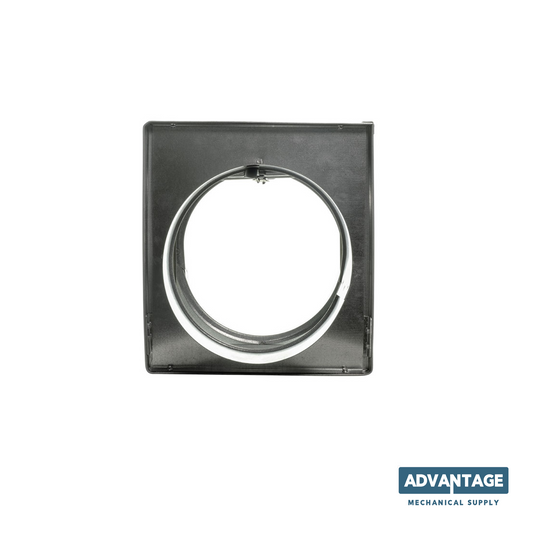
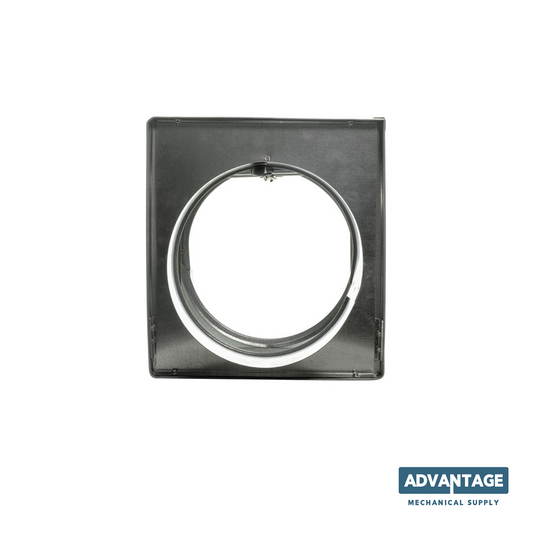
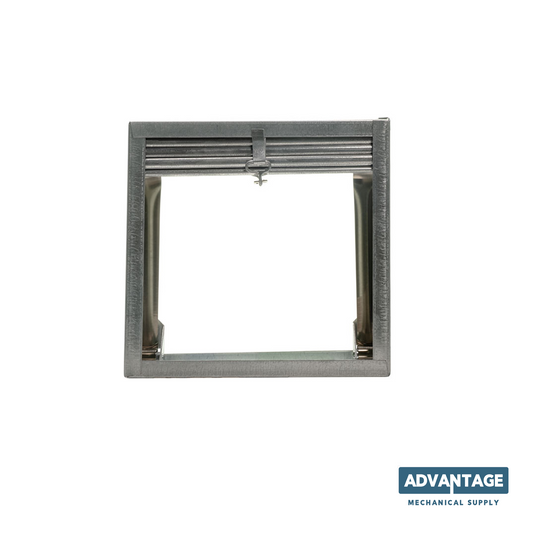
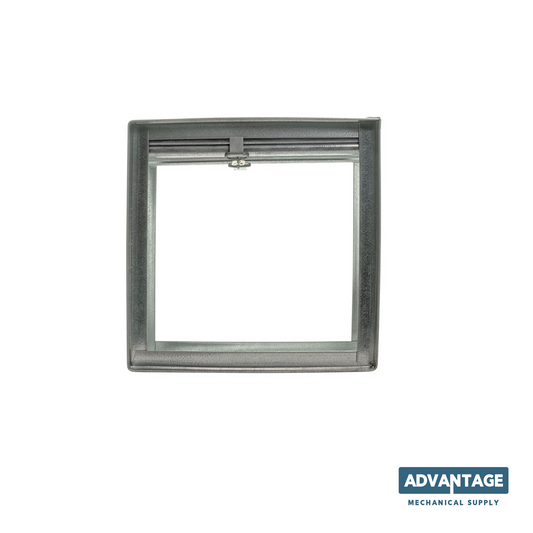
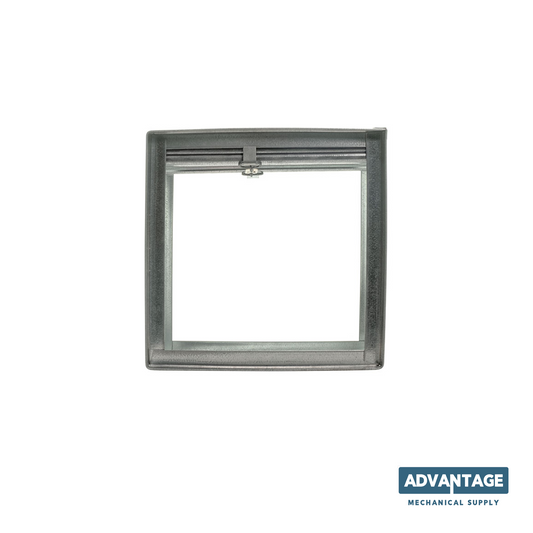
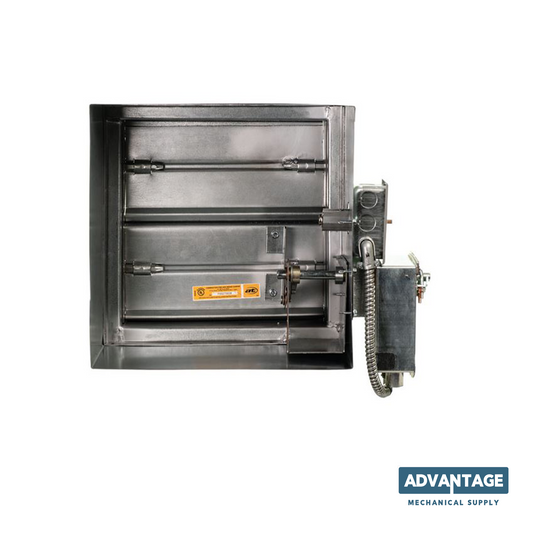
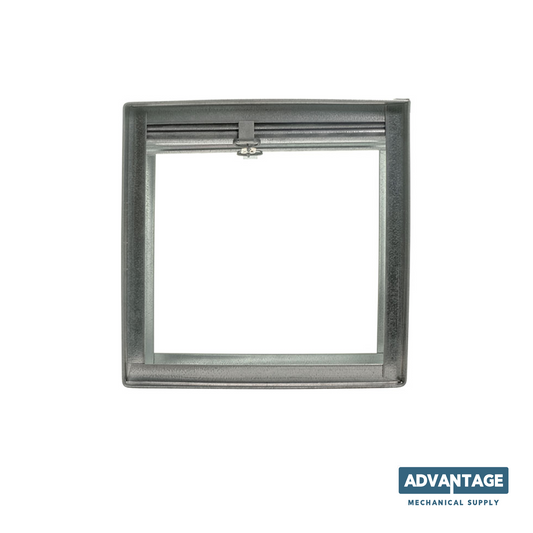
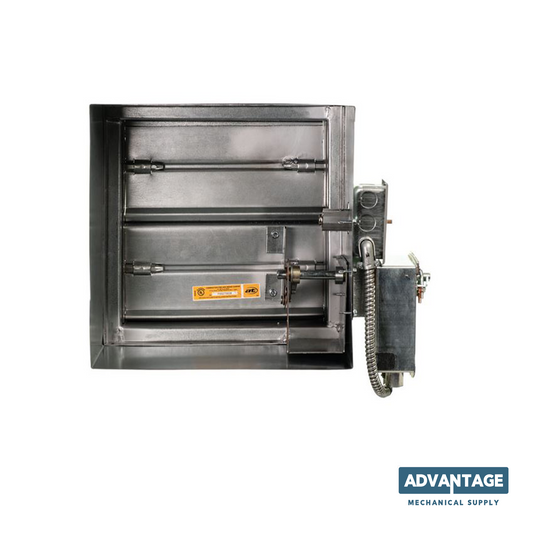
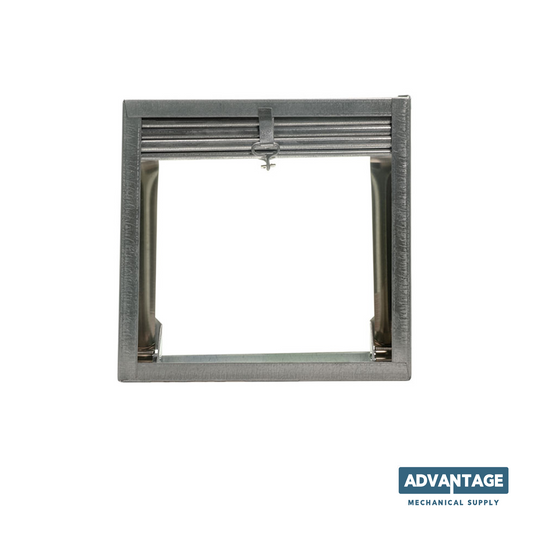
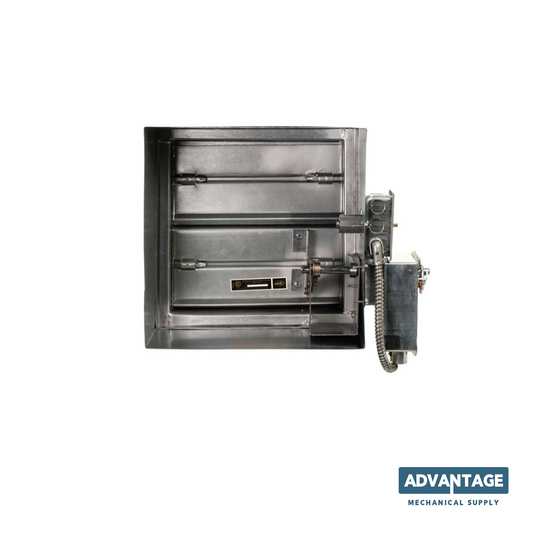
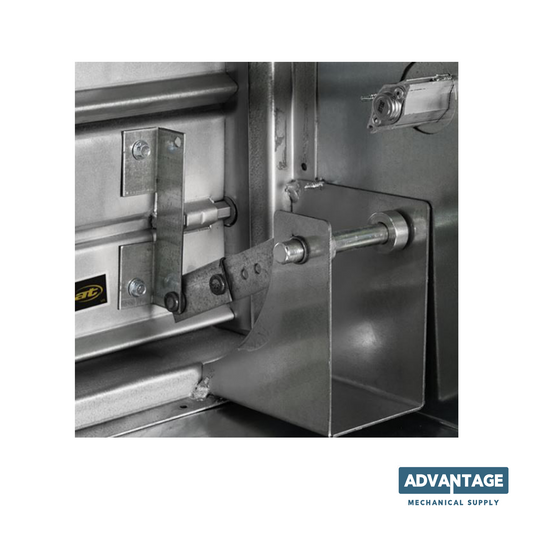
Un regulador de fuego es una cortina de acero que se mantiene abierta dentro de un marco mediante un enlace fusible. Cuando el aire del conducto alcanza la temperatura nominal del enlace (165 °F es el estándar), el enlace se funde y la cortina se cierra, impidiendo que las llamas se propaguen a través de los conductos hacia el siguiente compartimento cortafuego. Los reguladores de fuego se prueban según UL 555 y tienen una clasificación de 1-1/2 horas o 3 horas para coincidir con la pared o el piso en el que se instalan.
Reguladores de fuego por tipo
Reguladores de fuego estáticos (Series 05, 65, 75): Clasificados para cerrarse sin flujo de aire en el conducto, para sistemas que apagan los ventiladores al recibir una señal de alarma de incendio.
Reguladores de fuego dinámicos (Series 61, 77): Clasificados para cerrarse contra aire en movimiento, para sistemas donde los ventiladores siguen funcionando durante un incendio. El Thinline de la Serie 61 tiene un perfil delgado para recorridos de conductos estrechos.
Tipo A vs. Tipo C: En un regulador Tipo A, la cortina plegada se encuentra en el flujo de aire y reduce ligeramente el área libre. Los modelos Tipo C desplazan la cortina fuera del flujo de aire y añaden un collarín redondo para una conexión directa a conductos redondos.
Reguladores de humo y reguladores combinados de fuego y humo
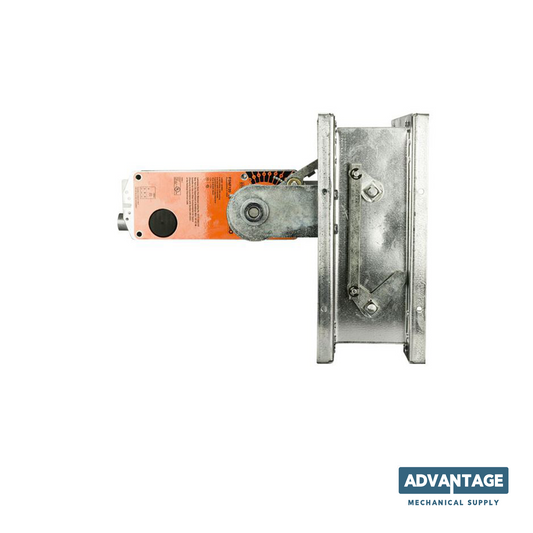
Un regulador de humo se cierra mediante una señal de un detector de humo o sistema de alarma de incendio a través de un actuador eléctrico. Los reguladores de humo se prueban según UL 555S y se clasifican por clase de fuga: la Clase I no permite más de 4 CFM por pie cuadrado a 1 pulg. de presión estática, la Clase II no más de 10.
Los reguladores combinados de fuego y humo de las Series 10 y 30 cuentan con las certificaciones UL 555 y UL 555S, para penetraciones donde coinciden una barrera cortafuego y una barrera antihumo. El regulador de humo de la Serie 20 cubre barreras antihumo sin clasificación cortafuego, y el regulador de pasillo de la Serie 40 se prueba para instalación horizontal en techos de pasillo clasificados.
Ordene el regulador clasificado para su orientación (vertical en paredes, horizontal en pisos), y planifique una puerta de acceso en cada regulador. Su ingeniero y la autoridad local competente tienen la última palabra. Para reguladores sin clasificación, consulte reguladores y persianas de HVAC.
Pedidos de proyectos
Envíe su tabla de reguladores a través del formulario de cotización o llame al +1 (334) 822-4897.