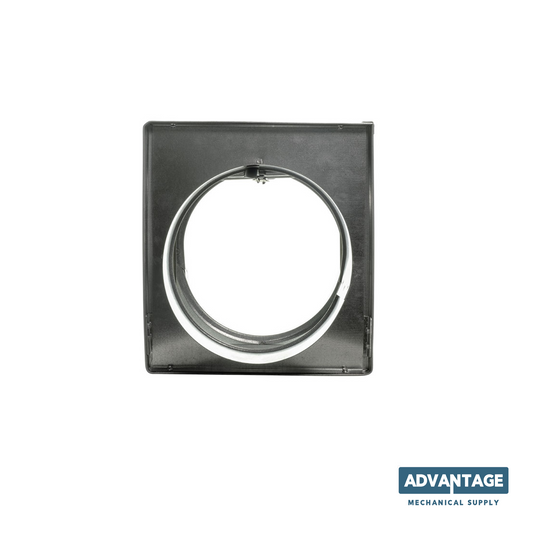
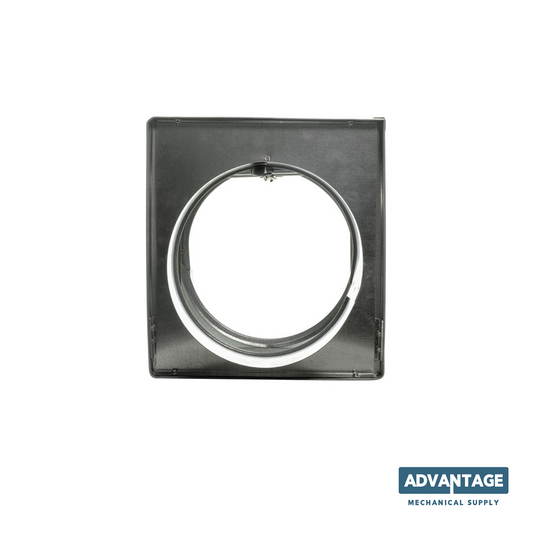
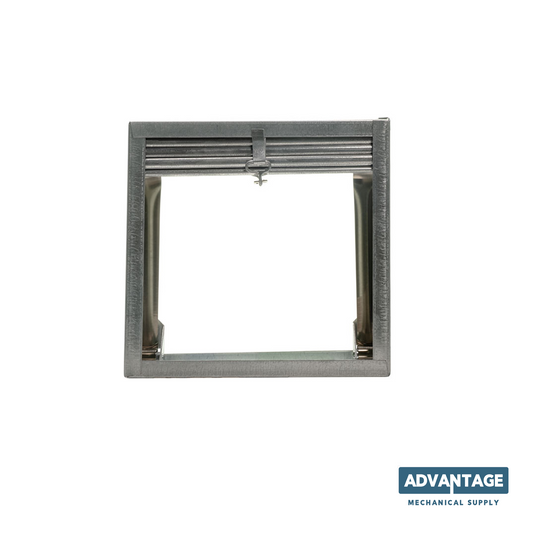
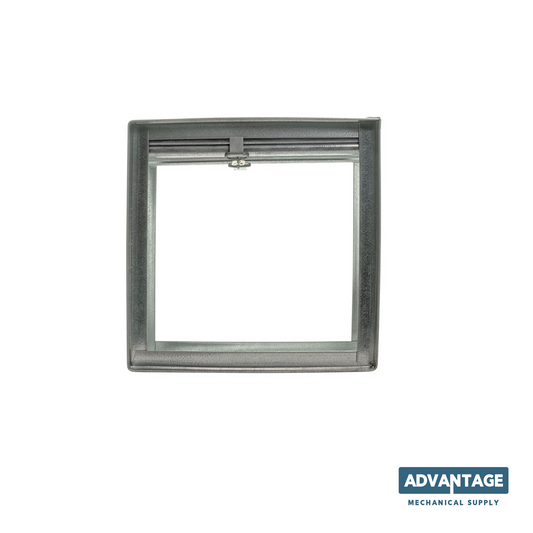
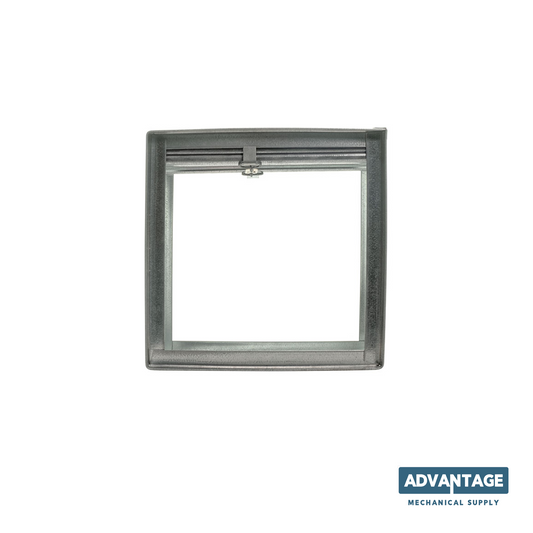
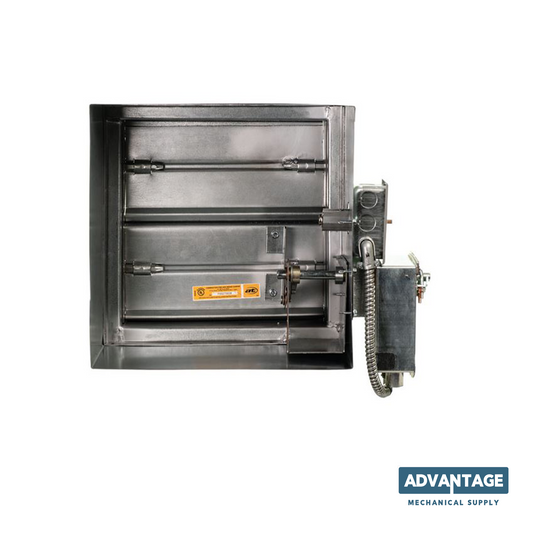
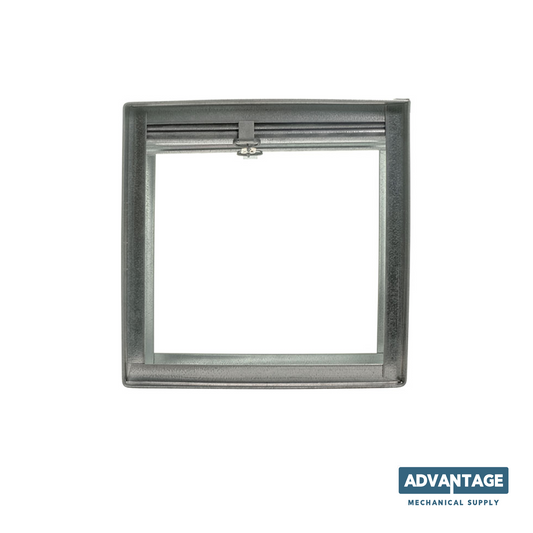
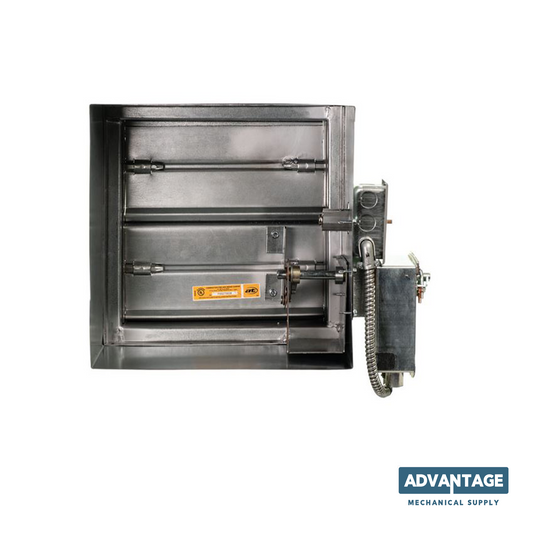
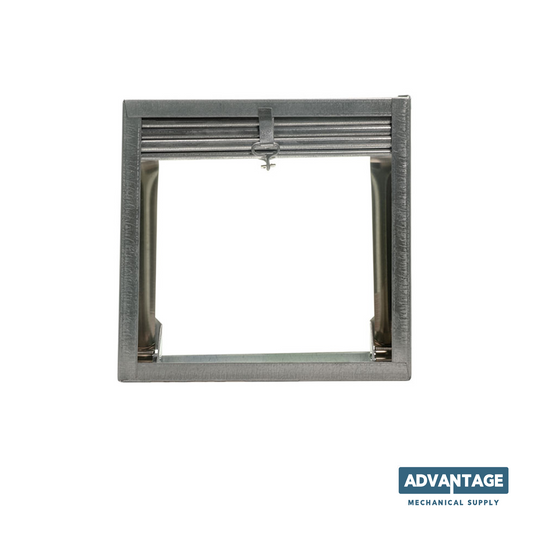
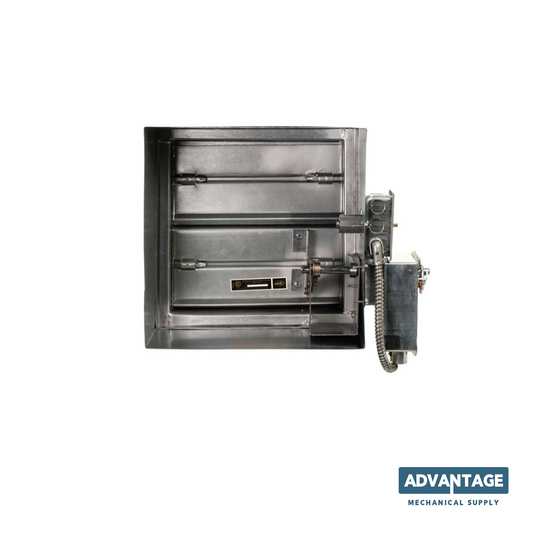
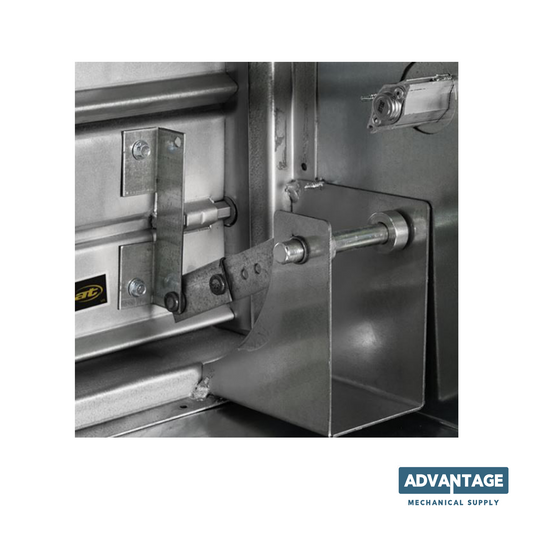
A fire damper is a steel curtain held open inside a frame by a fusible link. When duct air reaches the link’s rated temperature (165°F is standard), the link melts and the curtain closes, blocking flame from traveling through the ductwork into the next fire compartment. Fire dampers are tested to UL 555 and rated 1-1/2 hours or 3 hours to match the wall or floor they sit in.
Fire dampers by type
Static fire dampers (Series 05, 65, 75): Rated to close with no airflow in the duct, for systems that shut fans down on a fire alarm signal.
Dynamic fire dampers (Series 61, 77): Rated to close against moving air, for systems where fans keep running during a fire. The Series 61 Thinline has a slim profile for tight duct runs.
Type A vs. Type C: On a Type A damper, the folded curtain sits in the airstream and slightly reduces free area. Type C models move the curtain out of the airstream and add a round collar for a direct connection to round duct.
Smoke dampers and combination fire smoke dampers
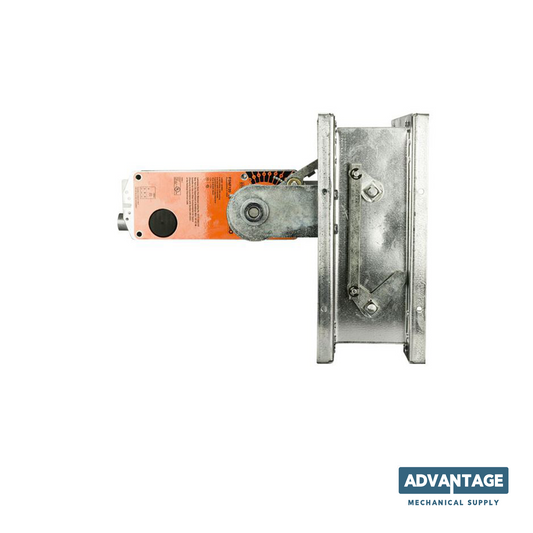
A smoke damper closes on a signal from a smoke detector or fire alarm system through an electric actuator. Smoke dampers are tested to UL 555S and rated by leakage class: Class I allows no more than 4 CFM per square foot at 1 in. w.g., Class II no more than 10.
Series 10 and 30 combination fire smoke dampers carry both UL 555 and UL 555S listings, for penetrations where a fire barrier and smoke barrier occur together. The Series 20 smoke damper covers smoke barriers with no fire rating, and the Series 40 corridor damper is tested for horizontal installation in rated corridor ceilings.
Order the damper listed for its orientation (vertical in walls, horizontal in floors), and plan an access door at every damper. Your engineer and the local authority having jurisdiction have the final word. For non-rated dampers, see HVAC dampers and louvers.
Project orders
Send your damper schedule through the quote form or call +1 (334) 822-4897.